
If you’re a fan of adorable cats and cute food-themed art, The Mofusand Cat Cafe Cookbook is a release you won’t want to miss. As a lover of all things Mofusand, I was thrilled to get my hands on this new cookbook. Just looking at the front and back covers—covered in playful illustrations of Mofusand cats dressed up in food costumes and enjoying tasty treats—gives you a great preview of how charming the entire book is.
Created by Japanese illustrator Juno (Junko Noji), Mofusand has become a massive hit with fans worldwide, with merchandise popping up everywhere from Uniqlo and Miniso to Target. The series is famous for its whimsical, fluffy cats—the name itself is a playful mashup of the Japanese word “mofu mofu” (soft and fluffy) and “sand” (short for sandwich)—who are often pictured wearing cute outfits like sharks, fruit, and different foods, making a cafe-themed cookbook a natural fit.
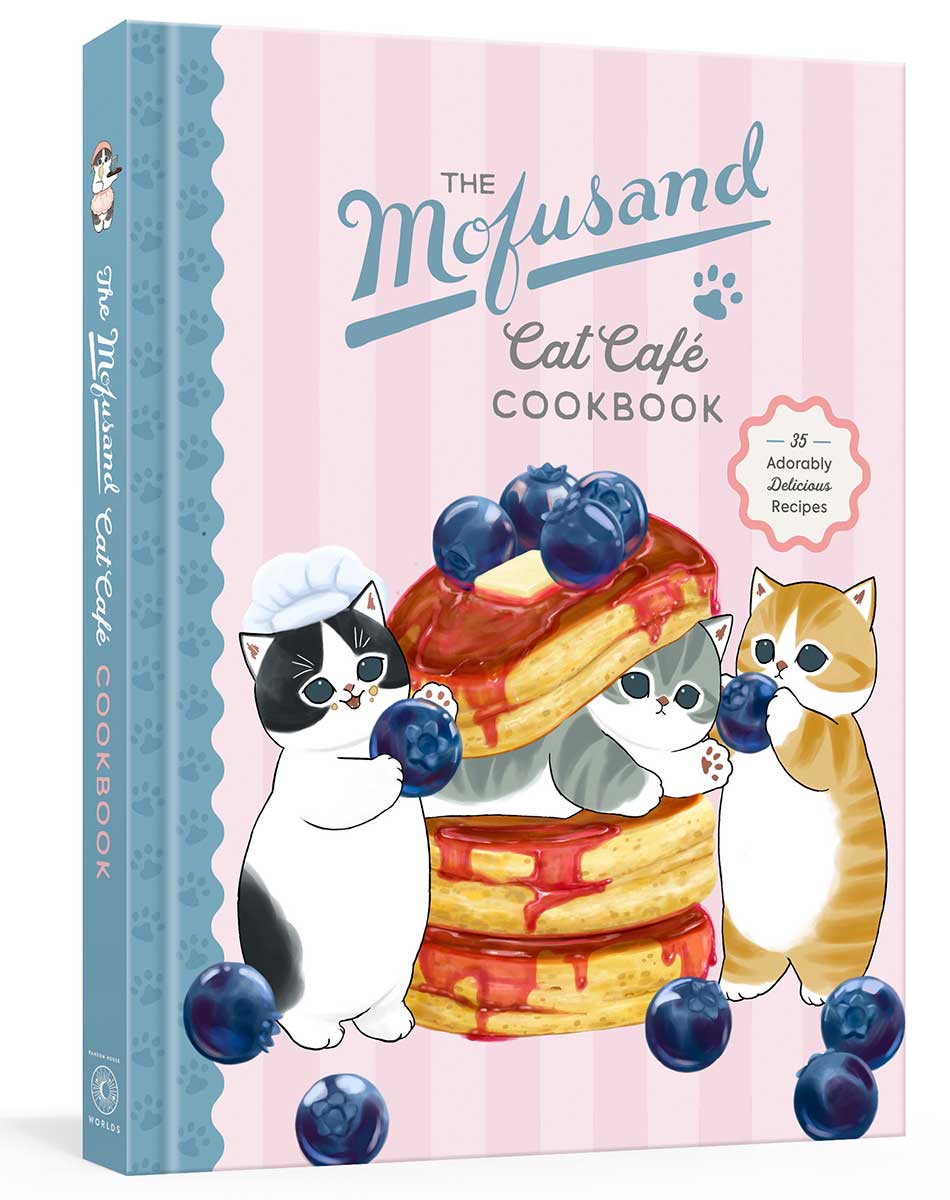
I was personally most excited and curious to take a look at the cookbook, since it would have the most content. Although I don’t cook or bake that often, I do love looking through themed cookbooks. The Mofusand cookbook did not disappoint, as it is filled with 35 Mofusand-themed recipes. The recipes are split into three sections: Drinks, Savories, and Sweets, with a bonus recipe for Catnip Treats included at the end. The book was written by Rebecca Podos, with recipes provided by Susan Vu, and illustrations by Annie Chen and Hannah Holden.
Flipping through the book, I couldn’t help but smile seeing so many adorable Mofusand cats. Each page features cats posing with the recipes, usually holding an ingredient listed in the recipe or even wearing a costume matching the featured recipe. For example, the recipe for Tenmusu (Shrimp Tempura Rice Balls) displays several cats wearing shrimp tempura costumes. In other recipes, the cats can be seen wearing a strawberry costume and even a shark costume. Some cats can be found snuggled up in pancakes, riding in a melon slice, or lounging on a lemon bar.
Since this is a cookbook, I mainly just expected to find recipes, but when I began perusing the book from the beginning, I realized there was a story included which sets up the background of the recipes. It describes the reader’s journey one morning when they wander into the Mofusand cafe and discover the cats working at the cafe, all wearing aprons and other costumes, and serving and cooking delicious treats. The reader orders a mouth-watering breakfast sandwich and is surprised and completely satisfied by the wonderful flavors. As the seasons change, the reader continues to visit the cafe and try various seasonal dishes which are featured in this cookbook, all just as delicious as the last.
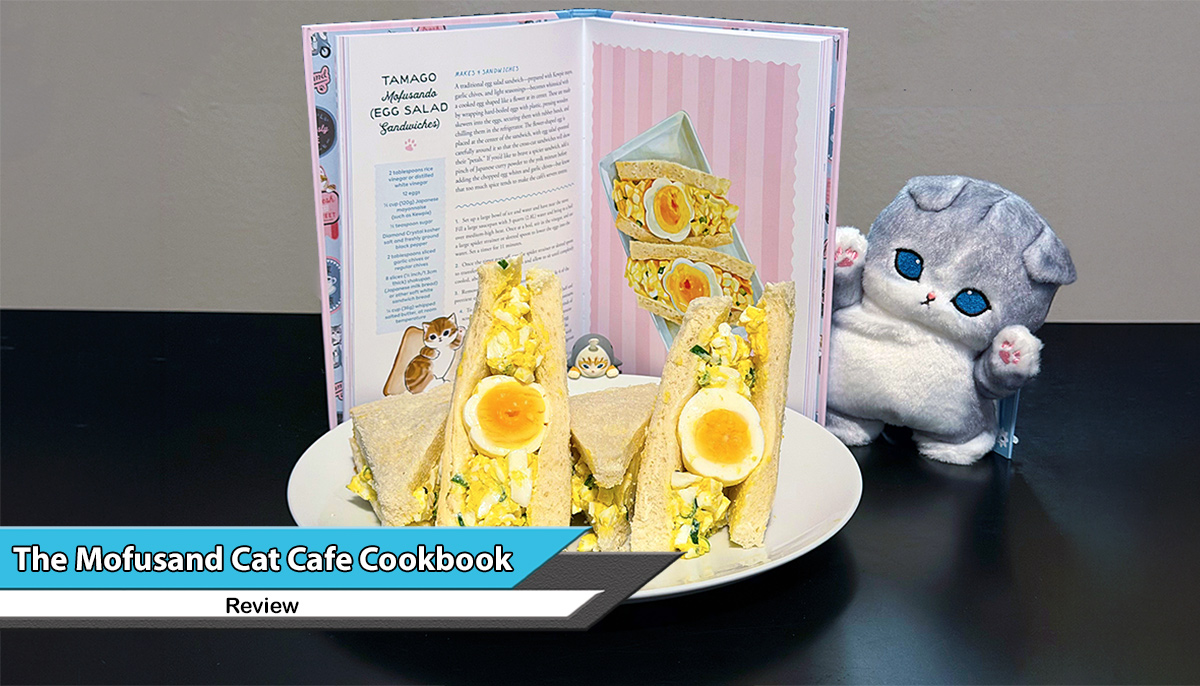
As part of my review of this book, I of course had to try making a recipe for myself. It was hard to choose, but I decided to make the Tamago Mofusando (Egg) Salad Sandwiches. I wanted to start with a recipe that wasn’t too complicated, and this one seemed easy enough for someone like me who isn’t practiced in cooking. It also required ingredients that were easy to find in stores, since some recipes called for Japanese ingredients or other items that would be more difficult to find. I was also amused by the pun in the name, since “sando” is the term commonly used to refer to Japanese sandwiches.
Following the recipe was easy, and I felt that the instructions were clear and straightforward. This egg salad sandwich recipe reminded me of making deviled eggs, which I have made successfully before. The recipe doesn’t call for a large amount of seasoning or garnishes, mostly just salt, pepper, and chives, which added a nice pop of green among the yellow egg mix.
One interesting part of this recipe was that it instructs the cook to make hard-boiled eggs into the shape of a flower using wooden skewers and plastic wrap. I was slightly confused about how to go about this, but after rereading the instructions and studying the picture of the sandwich, I was able to understand. To be honest, making the hard-boiled egg into a flower shape isn’t necessary for the recipe, but it is a nice aesthetic touch.
Finally, it was time to eat! When I took the first bite, I was pleasantly surprised by the light taste. The sandwich was delicious, not too bland, and had a good amount of flavor and seasoning. I had been worried that the chives might be overpowering, but they were just right. The recipe called for the sandwich to be cut in half so that the hard-boiled egg displayed the flower shape, which made the sandwich more appealing and attractive.
I had a ton of fun making the Mofusando sandwiches and felt like the recipe was delicious and easy to follow. I think this recipe would be perfect for events like brunch, a baby shower, or a garden party, but it could also just be made for a standard lunch. Now that I’ve successfully made this recipe, I would love to try more from the cookbook, possibly a drink or dessert. I would definitely recommend this book to people who love to cook, as well as to Mofusand fans, and I’m glad to say that even Mofusand fans who are not experienced cooks will be able to enjoy this cookbook!
The publisher was kind enough to share an excerpt of the recipe below so you can give it a try yourself, and if you enjoy it as much as I did, you might just want to pick up a copy of the book!
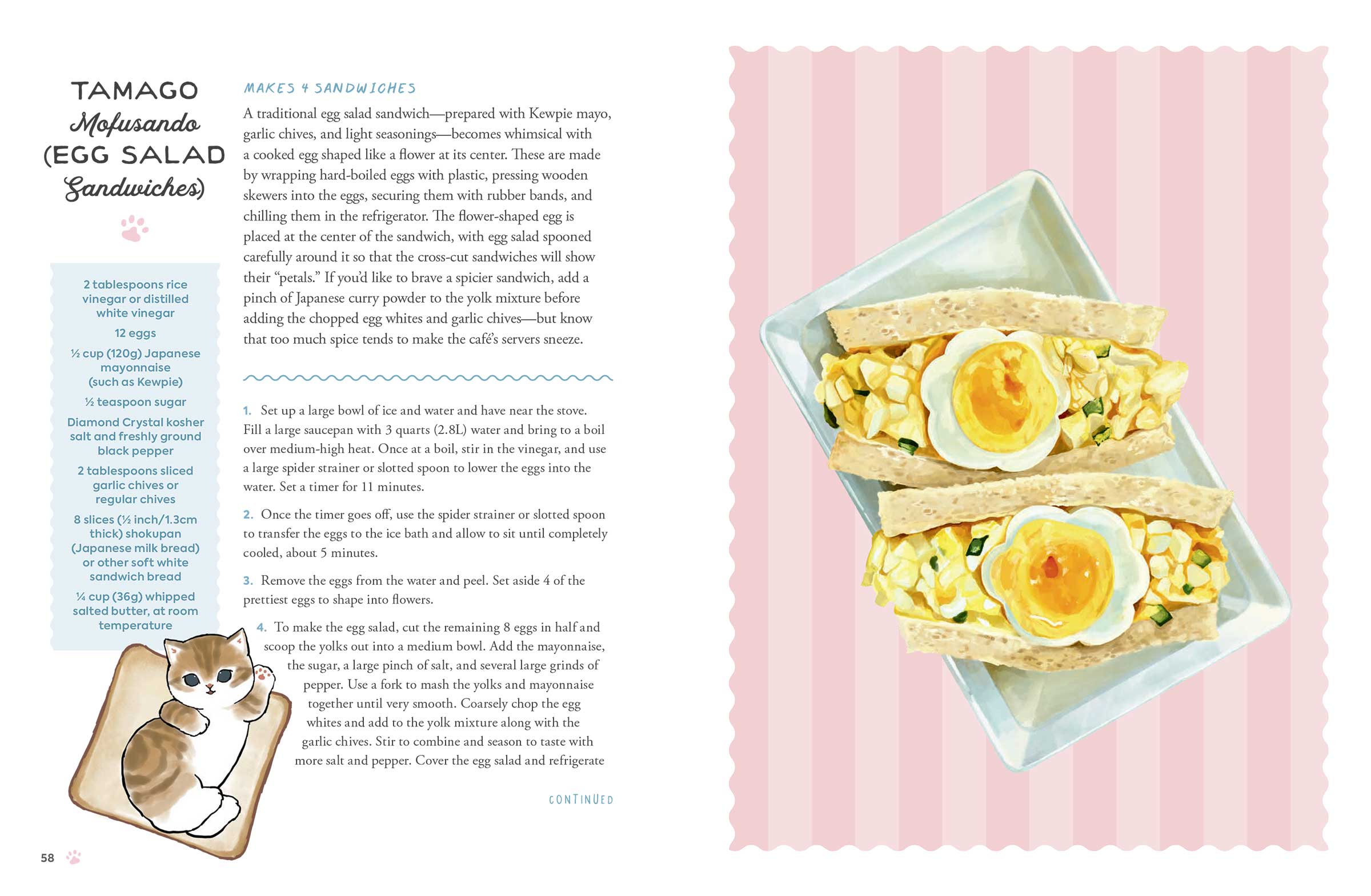 Tamago Mofusando recipe excerpt (Page 1) — Courtesy of the publisher
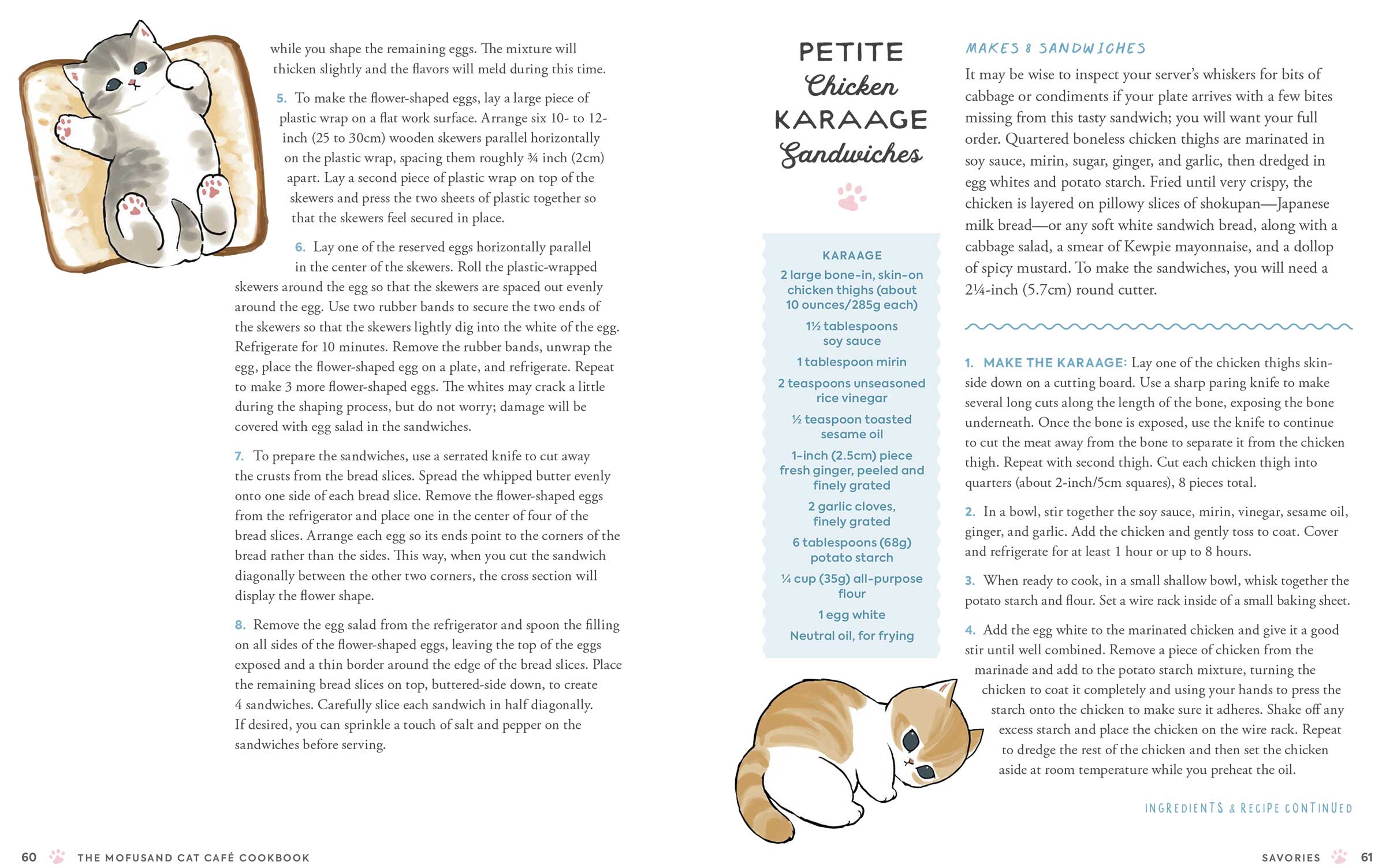
Tamago Mofusando recipe excerpt (Page 2) — Courtesy of the publisher
